
A Very Big Decision
A cultural (and literal) crossroads.

Editor’s note: This Dispatch will be released on Wednesday, the day before Austin City Council makes a once-in-a-generation decision during its May 22 meeting.
This is a newsletter delivered on Fridays. The Dispatch provides interesting news bits you may have missed and short cultural context to better understand the Capital City. Our goal is to keep you informed enough to get through a dinner party.
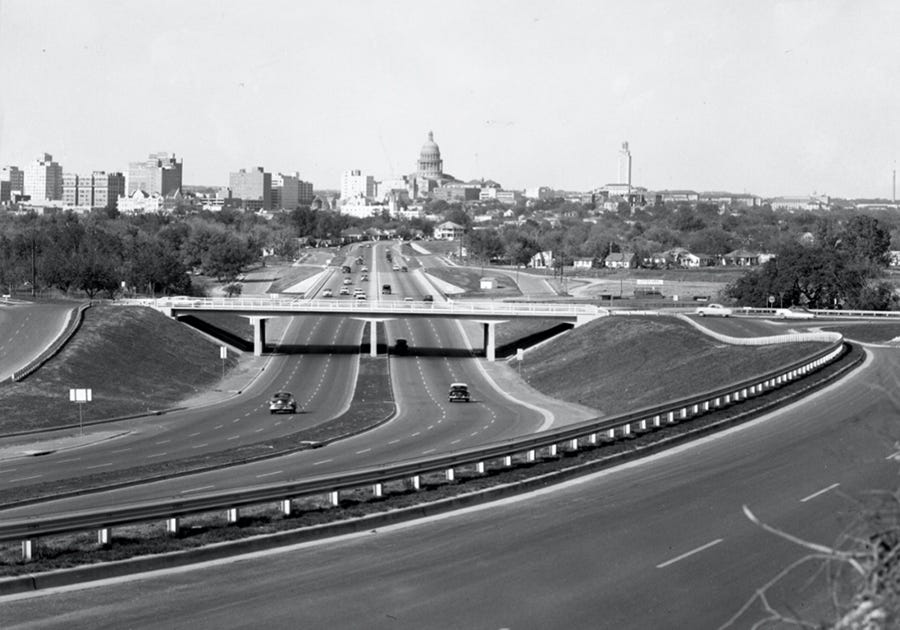
Austin, 1955. Courtesy of the Texas Department of Transportation
Nothing Gold Can Stay
Austin was the country’s first 21st century boomtown. Over the past few decades, it became a shiny beacon to what an American city could be: progressive, cool, the perfect blend of big-money Silicon Valley and a laid-back university town. It helped that Austin’s natural beauty provided a picturesque backdrop amid the rise of social media. Friday Nights Lights, Richard Linklater, and Robert Rodriguez using Austin as a muse didn’t hurt. It was so popular, it was named U.S. News and World Report’s best city to live in 2017, 2018, and 2019.
That growth in popularity mirrored Austin’s population trend. For years, it flirted with becoming one of the most populous cities in the U.S. In 2022, it finally broke into the top 10 only to slip right out a year later. But while its national standing volleyed back and forth, Austin remained the fourth most popular populous Texas city behind Houston, Dallas, and San Antonio. That’s of course until last week when Fort Worth took over and the click-bait headlines began.
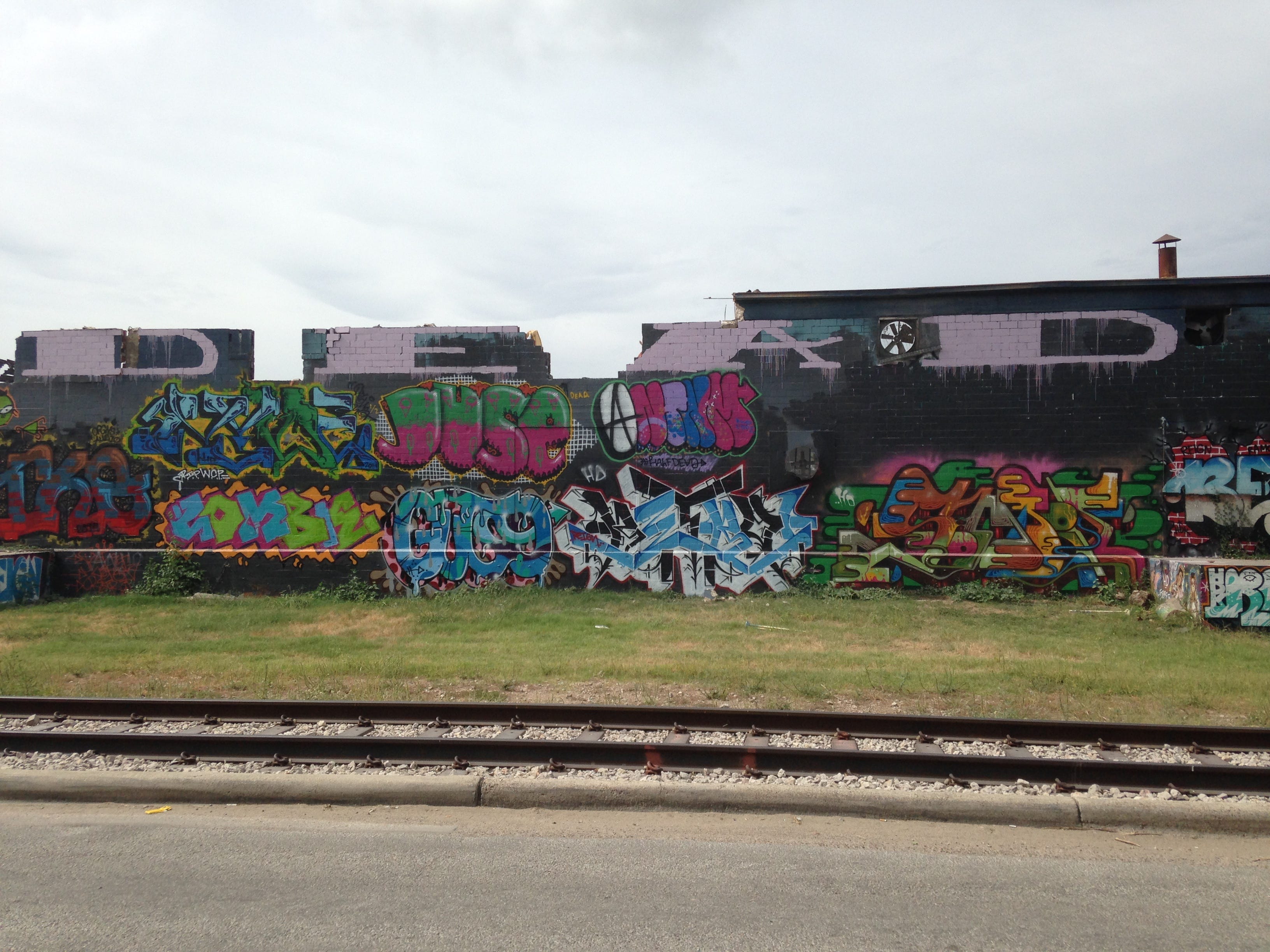
Former El Lago Tortilla Factory in East Austin, August 19, 2014
Fort Worth’s rise is due in part to affordability and job growth. (For additional economic context, read this 2023 issue of The Dispatch or this January 2025 Texas Tribune article.) Fort Worth is also steadfast. It knows what it is.
Throughout the first first quarter of a century, Austin was a microcosm for American culture at large. And it would appear it’s a microcosm for the country now. As the millennials slouch out of bright, airy all-day cafes and towards middle age, it would appear the generation behind them are two-stepping their way to the stockyards and rodeos of places like Fort Worth. Perhaps this is less about affordability (after all Travis County added 22,000 housing units last year, the fourth most in the nation, according to the Census Bureau) but more about trending towards conservatism (see: Gen Z voting) and Americana (see: Sinners, Cowboy Carter).
A Cultural Moment
The past week’s headlines declaring Austin’s declining popularity are little more than click bait, but they do illustrate a greater cultural melee happening in the city right now. We’re all over the place, unsure of who we are or what we want.
Examples:
Bring Elon Musk to Austin!
Actually, we hate his big fence. Kick him out.
Past two mayoral elections have been impossibly close because no one can decide who they want running this town.
There’s a group of
disgruntled nerdsacademics running a university using our name.The same restaurant groups opening the same restaurants again and again, resulting in a perpetual hospitality Groundhog Day while I happily fork over $22 for the privilege of sipping a mid-tier glass of wine on a nice patio.
We’ve lost the thread on who we want to be as a city. And nothing illustrates that better than I-35.
On Thursday, May 22, Austin City Council will decide whether or not we “cap” the interstate, which would bury 26 acres of the highway through downtown and replace it with parks and other usable space. And it appears that this billion-dollar decision will come down to a single vote: Mayor Kirk Watson. (See? Austin really is a microcosm for the U.S.! Our future is decided by a white man here, too!)
There is a major economic impact to capping and stitching I-35, which KXAN and KUT have both done a good job reporting on. There’s also a cultural impact: the project would knit the city back together nearly 70 years after it was divided along racial lines.
Writes council member Ryan Alter:
“On May 22, we’ll decide the future of the spine of downtown for the next 60+ years. Our neighbors, children, and grandchildren can either have a superhighway running through the heart of our city or a series of green public spaces where communities can come together instead of letting a concrete barrier keep them apart.”
Proponents of the project point to Boston’s The Big Dig and Dallas’ Klyde Warren Park as two examples of successful cap-and-stitch projects. They also note the project will result in increased green spaces, lesser environmental impacts, and additional real estate throughout the city’s urban core.
But not so fast, say detractors. In an op-ed in the Austin Chronicle, council member Mike Siegel argues this will not be the idyllic Garden of Eden supporters are touting it to be.
“[T]he caps will not reconnect our communities…The caps themselves do not create additional connections. Instead, the downtown caps would sit next to the TxDOT crossings, surrounded by up to 22 lanes of highway and frontage roads,” Siegel writes.
“Austin needs a careful approach. We live in an era of state preemption and DOGE-mandated austerity, and the city has more than $10 billion in unmet capital needs.
This is a once-in-a-generation decision that needs your input, no matter where you land. Before the council meets tomorrow, consider writing the council members here or signing up to speak at the meeting. (Note, this Dispatch publishes at 9 am and the speaker registration closes at noon today.)
4 other things to know this weekend.
The owner of a popular Texas bookstore chain gets political.
A most perfect T-shirt.
A good breakdown of why Austin can’t do much when it comes to immigration. Another good piece from Grace Reader at KXAN.
Popular crazy house account ZillowGoneWild featured this $950,000 house in Dripping Springs. (Editor’s note: I thought the house was lovely?)